
Nepal's devastating flash floods have claimed 1,127 lives, with thousands still missing a week after the disaster. Rescuers are intensifying efforts to find survivors and recover bodies across affected regions, while police work to identify victims and relocate families from high-risk areas.

Climate experts explain how El Nino and climate change are intricately linked, with El Nino delaying monsoon onset and climate change intensifying rainfall. This new reality is altering the Indian monsoon's behaviour, leading to short-duration, high-intensity rain spells, especially in western and northwestern regions.

A senior cryosphere specialist has warned of a potential secondary flash flood in Nepal due to debris from an ice-rock avalanche accumulating at a river confluence, creating a temporary dam that is collecting water.

Mumbai and Pune are grappling with severe monsoon weather, triggering an 'orange' alert, widespread disruptions, school closures, and tragic fatalities from landslides and wall collapses.

Scientists are examining how a possible glacial collapse and ice-rock avalanche may have triggered the devastating flash floods along Nepal's Bhote Koshi River, with preliminary assessments indicating that debris may have temporarily blocked the Lhende River and created a landslide dam that subsequently gave way.

Most north Indian states reported below-normal temperatures on Monday, with rain and thunderstorms lashing parts of Uttar Pradesh, Rajasthan, and Himachal Pradesh. The southwest monsoon is expected to arrive in Kerala in the next two to three days.

The weather office has warned that the prevailing monsoon conditions could trigger flash floods, landslides, waterlogging and a further rise in river levels across the Northeast.

Commerce Minister Piyush Goyal announced that the legal scrubbing of the India-EU Free Trade Agreement (FTA) text is expected to be completed within 10-12 days, with the final deal anticipated to be signed by December 31.

Ten people were killed in rain-triggered floods in China as Typhoon Noul made landfall early Sunday in the southern province of Guangdong.
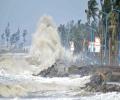
The India Meteorological Department (IMD) has announced that conditions are becoming favourable for the onset of the southwest monsoon over parts of the south Bay of Bengal, Andaman Sea, and Andaman and Nicobar Islands towards the end of this week.

S&P Global Ratings projects India's economic growth to slow to 6.6 per cent in FY27, down from 7.7 per cent in FY26, citing energy stress and a potential sub-par monsoon.

Nepal is grappling with one of its worst disasters in recent years as massive flash floods, triggered by an ice avalanche, have claimed 270 lives and left thousands missing across multiple districts, prompting urgent rescue and relief operations.

India's hydropower generation has been significantly constrained in July due to the El Nio effect, which has weakened the southwest monsoon and reduced reservoir levels. This decline, following a 21 per cent year-on-year drop in June 2026, is forcing greater reliance on coal generation and straining grid flexibility amidst rising power demand.

Punjab Kings face Mumbai Indians in a crucial match in Dharamsala, but the weather forecast threatens to disrupt their playoff hopes.

Torrential monsoon rains unleashed widespread destruction across several parts of the country on Thursday, inundating roads, uprooting trees, damaging property and disrupting normal life as authorities scrambled to restore normalcy.

A new report by child rights NGO CRY reveals that nearly seven in every 10 school-going children across India missed school or routine activities from May to June this year due to extreme heat, with 76 per cent reporting negative impacts on their ability to focus on studies.

Six labourers died and three were injured when part of an under-construction bridge collapsed in Hamirpur, Uttar Pradesh, following a storm. The incident occurred early Friday morning as labourers slept on a slab of the bridge.

Union Minister Jitendra Singh launched two advanced weather forecast products developed under the Ministry of Earth Sciences (MoES), aimed at delivering hyper-local, impact-based and artificial intelligence (AI)-driven weather services across India.

A massive flash flood originating in Tibet has devastated central Nepal, killing 17 people and leaving nearly 500 missing, including 105 Indians. The deluge, caused by a rock slide near the Nepal-Tibet border, swept through districts, washing away bridges and severely damaging at least a dozen hydropower projects.

"Rather than worrying, preparation is required. Contingency plans will be made for affected districts and crop changes will be considered wherever necessary"

Incessant overnight rainfall has triggered severe flash floods and landslides in Jammu and Kashmir's Poonch and Rajouri districts, resulting in at least eight fatalities and six people missing, prompting Chief Minister Omar Abdullah to cut short his Delhi visit to personally monitor the situation.

The IMD has issued an orange alert for heatwave conditions in parts of Kerala, prompting authorities to urge caution. Maximum temperatures are expected to reach up to 41 degrees Celsius in some districts. Strict guidelines have been issued, including the suspension of vacation classes and rescheduling of working hours.
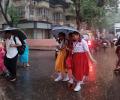
At least 19 people have died in Karachi, Pakistan, due to severe rainstorms, thunderstorms, and strong winds, causing building collapses and electrocution.

The Brihanmumbai Municipal Corporation (BMC) has announced a 10 per cent water cut across Mumbai starting May 15, citing concerns over a below-normal monsoon forecast due to the El Nino weather pattern. The current water stock in the city's seven lakes is expected to last until July 6.

Mahindra & Mahindra (M&M) is expanding its farm equipment strategy beyond tractors to include a wider range of mechanisation solutions like harvesters, balers, seed drills, and telematics-enabled services, aiming to capitalise on the growing demand for rental services by rural entrepreneurs and address low mechanisation levels in Indian agriculture.

After a subdued start, the southwest monsoon has gathered pace since the beginning of July, narrowing the cumulative rainfall deficit from nearly 30 per cent on June 30 to around 15 per cent as of July 8.

Researchers at IIT Bombay have discovered that heatwaves in the Indo-Gangetic Plains are primarily caused by local land and weather conditions, rather than hot air originating from elsewhere, emphasising the need for location-specific early warning systems.

Prime Minister Narendra Modi has urged Indian citizens to take precautions during the ongoing heatwave, emphasising hydration and care for vulnerable individuals and animals.

Mumbai has spent four centuries building folklore around its monsoon: The potholes, the delayed trains, the office debates about whether it will 'break' this week or next. It turns out the rain was always a market. Nobody had built the exchange for it until now!

Heavy rains and thunder returned to Mumbai, causing significant delays in local and long-distance train services, particularly affecting routes towards Gujarat and Pune. Two key reservoirs, Tulsi and Vihar lakes, have begun overflowing, though the city's overall water stock remains at 41.43 per cent.

A new study indicates that India's monsoon season could experience a significant increase in uncompensable heat stress under a 2 degrees Celsius global warming scenario, extending the duration of extreme heat conditions.
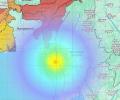
An earthquake of magnitude 6 with its epicenter in Myanmar jolted Kolkata and its adjoining areas, causing tremors and concern among residents.

The IMD is predicting close to a 60% probability of deficient rainfall, which means there is a strong possibility that the monsoon this year will be poor.

Heavy monsoon rains have severely impacted Mumbai and its surrounding areas, leading to landslides, suspension of train services, and at least 13 fatalities over the past few days. The Mumbai-Pune Expressway was also shut due to a concrete pillar collapse and waterlogging.

India is likely to witness a mixed temperature pattern along with wetter-than-usual conditions in May, with the India Meteorological Department (IMD) indicating that rainfall across the country is "most likely to be above normal" at over 110 per cent of the long period average (LPA).

High levels of ultraviolet (UV) radiation have been recorded across Kerala, prompting warnings from the Kerala State Disaster Management Authority (KSDMA). Residents are advised to take precautions to avoid prolonged exposure, especially during peak hours.

A severe cold wave has gripped North India, with temperatures plummeting to near-freezing levels in several areas. The cold wave has disrupted daily life, with dense fog affecting visibility and forcing people to stay indoors.

The India Meteorological Department (IMD) has predicted below normal monsoon rains for India this year, citing the potential emergence of El Nino conditions. This could significantly impact the country's agriculture-dependent economy.

Mumbai experienced heavy overnight monsoon rains, with some areas receiving over 200 mm in 24 hours, leading to widespread waterlogging, traffic congestion, and disruptions in suburban train services, particularly on Central Railway lines due to a track cave-in.
Unseasonal rainfall could damage standing wheat crops, especially late-sown fields nearing maturity and grain-filling stages.
